My JazzVoice Students Are Afraid to Improvise. Here’s What I Tell Them to Do.
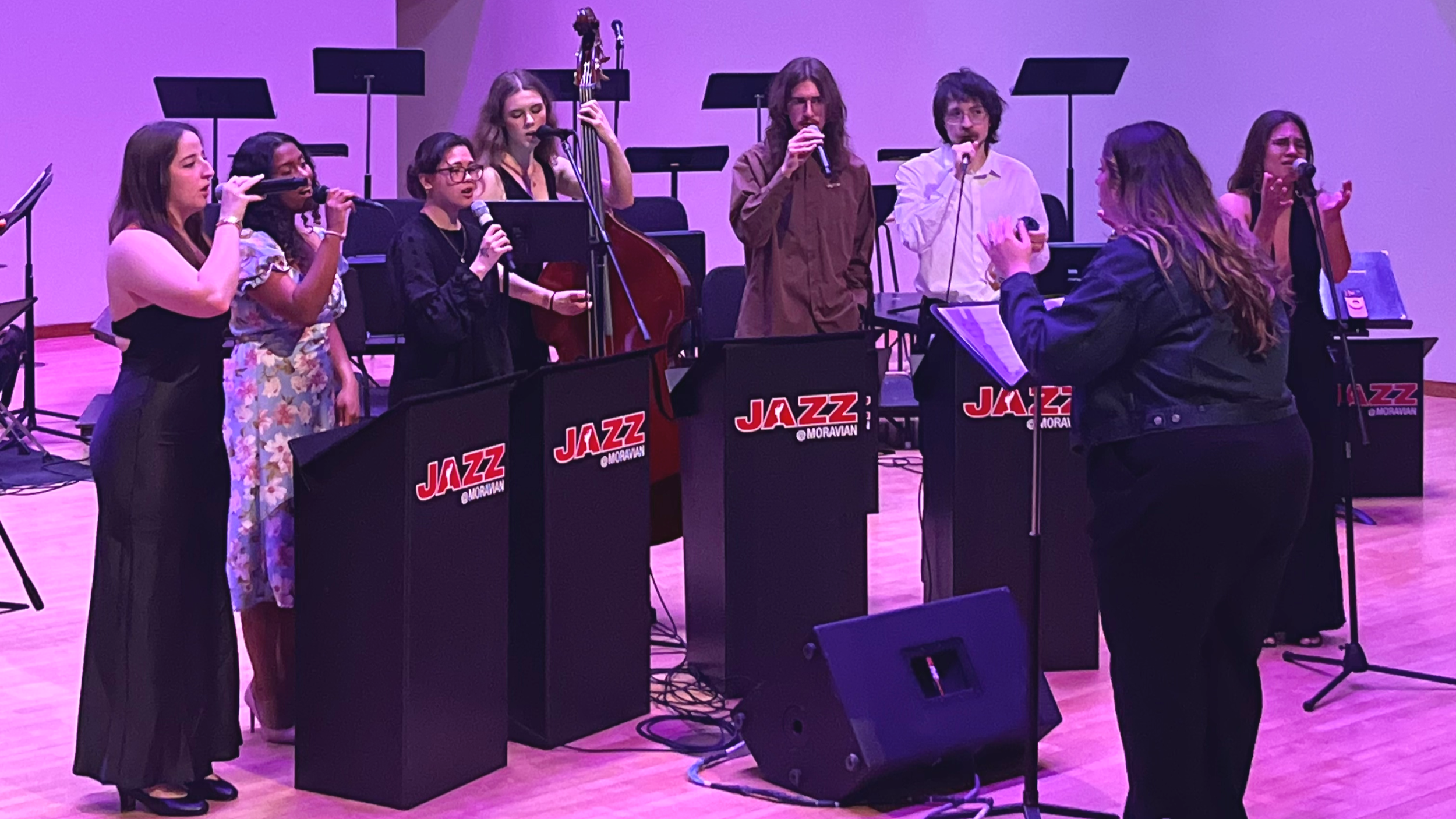
To all of my jazz voice students: yes, you have to learn how to improvise.
If you're going to call yourself a jazz vocalist, improvisation is part of the job. Jazz is an improvisational art form, and if we avoid improvisation altogether, we're stripping away what makes the music what it is.
The good news is you don’t have to be perfect every time, you just have to be willing to try.
Vocal improvisation can be one of the most liberating and also vulnerable things we can do as musicians. For one thing, vocalists don’t have buttons. So unless you have perfect pitch and a highly developed ear, you can’t always expect to sing any pitch you want on command. Developing that kind of accuracy takes some serious practice. There is also a stigma around vocalists improvising. When a vocalist makes a mistake on the bandstand, it can feel especially embarrassing. There’s this unfortunate idea that vocalists don't know what they're doing, or that we're somehow less knowledgeable about music than instrumentalists.
Listen, we KNOW what we are doing and it took a lot of work to be able to do so.
And vocalists have some pretty cool advantages when it comes to improvising. We have an entire range of tone colors, syllables, dynamics, articulations, and vocal textures that aren't possible on most instruments. We can change the character of a single note just by changing how we sing it.
So I get it! Improvising can be scary sometimes! So let’s practice improvising in a way that takes some of the pressure off so it’s a bit more approachable. Here are a few exercises I give my students.
1: Stop analyzing yourself in the moment.
We’ve all been there. You're singing a line that didn’t quite land and you immediately cringe, swear or want to start over. Stop doing that.
Give yourself permission to simply play during a practice session and save the analysis for later. Pick a tune you want to solo over, record yourself improvising, and don't stop every time something doesn't work. Just keep going.
Now you can listen back and figure out what happened. Maybe a note didn't work because you were only a half step away from a chord tone. Maybe the rhythm was interesting, but the pitch didn't quite land. Maybe you had an idea that you really liked, but you didn't know how to finish it. This is all useful information and not a flop!
When you record yourself and listen back later, you give your ideas a chance to develop. You can take something that didn't quite work and figure out why it didn't work and what you could change.
"That note was a half step away from the chord tone. What if I add one more note before it?"
Now that mistake becomes a line, an idea, and something you came up with on your own!
2: Think about the entire arch of the solo rather than outlining every chord change.
We are artists at the end of the day after all so, your solo needs to tell a story.
It's very easy to get caught up in proving that you can hear and outline every chord change. You may end up trying to sing as many notes as possible because you want to demonstrate that you know the changes. And yes! Knowing the changes matters! But let’s zoom out.
Focus on the artistry of the solo rather than the mechanics.
What is the overall arch of your solo? Where are you creating tension? Where can you leave space? Where can you sing more? You can create an arc using your range, rhythm, dynamics, articulation, tone, and the amount of space you leave between ideas. Not just the notes you sing.
Which leads me to…
3: try a one note solo
If improvising feels completely overwhelming, let’s take some elements away.
Pick one note! Change the rhythm. Change the articulation. Change the dynamics. Change the tone. Play with repetition and space.
This exercise is deceptively difficult, but it teaches you something really important: improvisation isn't just about what notes you sing. It’s where you place them. Yes I know that sounds cheesy but it’s true! Music would be a whole disorganised mess without somewhere to place the notes.
Once you’ve explored one note, add another one and see how you feel. You’ll probably become more creative than you think.
Check out Veronica Swift’s demo of a one note solo.
And if you sing a wrong note? Who cares?! Seriously, what's the worst that could happen?
Of course, we want to develop our ears and our technique so that we're making intentional musical choices. But when you’re working on improv sometimes you’ll make choices that don't work. That’s how you learn!
And if you're going to jam, remember that you don't have to walk into every jam session already knowing everything. It's okay to tell people that you're learning. It's okay to find jam sessions that are welcoming to beginners and musicians who are still developing their improvisational skills.
You can't really learn this stuff entirely by singing along with backing tracks in your bedroom. At some point, you have to make music with actual musicians.
You're going to try an idea that completely flops and then you're going to learn from it. That's how you get better!
So don't be afraid of improvisation! Improvisation is your chance to show what you know, experiment with what you don't know yet, and develop your own artistic voice. That's the fun part of this art-form.
And if all else fails, just sing the melody :).
Want to Dive In Further?
If you want to take your jazz improvisation to the next level, I offer private voice lessons in Philadelphia and online. We can work on improvisation, phrasing, ear training, jazz style, and developing your own individual artistry.
Ready to get started? Book a lesson with me!